
Making your own chocolate: from cocoa butter or directly from the bean
Share
In short
- The quick way: melt cocoa butter, stir in cocoa powder and powdered sugar, and pour into a mold.
- Water is a no-go. Even a few drops will cause the mixture to seize.
- Chocolate only achieves shine and a snap through tempering.
- Chocolate from the bean requires roasting, peeling, and very fine grinding. This is almost impossible without a melanger.
Contents
- What you need for homemade chocolate
- Chocolate from cocoa butter and cocoa powder
- Why homemade chocolate often remains matte
- Chocolate from cocoa beans: the bean-to-bar path
- Where homemade reaches its limits
- Learn to make your own chocolate
- Frequently asked questions about making your own chocolate
Making chocolate at home can be done in two ways. The quick way: melt cocoa butter, stir in cocoa powder and powdered sugar, and pour into a mold. The long way starts with the whole cocoa bean, involving roasting, peeling, and grinding. For the first, a water bath and a mold are enough. For the second, you need machines that are rarely found in any kitchen. We will show you both.
What you need for homemade chocolate
For the quick way, three ingredients suffice: cocoa butter as fat, cocoa powder for the flavor, and powdered sugar for sweetness. You also need a heat-resistant bowl, a pot for the water bath, a spatula, and a bar or silicone mold. A kitchen thermometer is not a must, but it takes the guesswork out of it.
One rule applies from the start: no water. Even a few drops or a little steam will cause the mixture to seize; it becomes tough and grainy. That is why powdered sugar is a better choice than honey or syrup.
Chocolate from cocoa butter and cocoa powder
The basic quantities for a dark bar are as follows. The more cocoa powder, the more bitter the result will be.
- 100 g cocoa butter
- 60 to 80 g cocoa powder
- 40 to 60 g powdered sugar
Melting the cocoa butter
Melt the cocoa butter in a water bath over low heat. The bowl should not touch the water so that no steam gets into the mixture. As soon as everything is liquid, take it off the stove.
Stirring in powder and sugar
Sift the cocoa powder and powdered sugar directly into the cocoa butter. If you don't sift, you will get lumps that you won't be able to remove later. Stir until the mixture is smooth and glossy. If you like, you can now add a pinch of salt, ground vanilla, or a few cocoa nibs.
Pouring and setting
Pour the mixture into the mold and tap the mold on the work surface a few times so that air bubbles rise. Then let it set in a cool place until the bar releases cleanly from the mold.
Why homemade chocolate often remains matte
The result is edible and often quite good. However, it is usually matte, and it lacks that snap when broken. This is due to the cocoa butter: it can solidify in several crystal forms, and only one of them provides shine and a clean snap. This form is created during tempering, i.e., melting, cooling, and re-heating slightly, each to specific temperatures. Without tempering, the chocolate often develops a gray haze. This is harmless, but it changes the appearance and the melt.
Chocolate from cocoa beans: the bean-to-bar path
Powder creates a chocolate-like bar. Real chocolate starts earlier, with the bean. Bean-to-bar means: everything from the bean to the finished bar is in one hand. This is how we work in our manufactory in Berlin-Mitte, and these are the steps.
Roasting
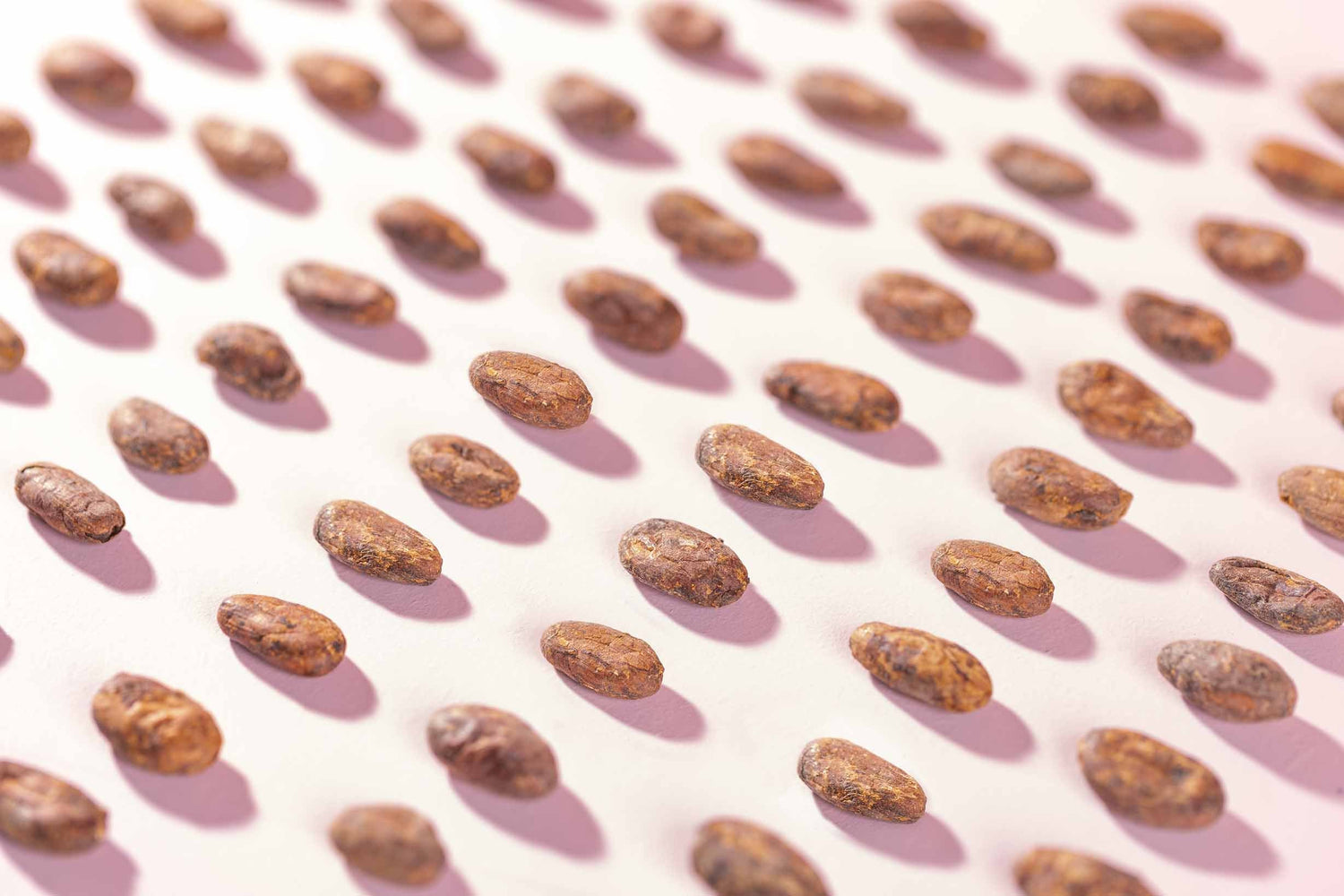
Cocoa beans arrive fermented and dried from the country of origin. The aroma that we associate with chocolate only develops during roasting. The temperature and duration of the roast help determine whether a bean tastes fruity, nutty, or strong in the end.
Cracking and peeling
Afterward, the beans are cracked and separated from their husks. What remains are the cocoa nibs, the actual raw material for the bar. By the way, the husks are not waste: we use them to make cocoa husk tea.
Grinding
This is the step where most kitchens fail. The nibs are ground, usually together with sugar, until the tongue can no longer feel any particles. We do this in a melanger, where stone rollers process the mixture over a long period. A stand mixer creates a paste, but not this fineness. The result then tastes like cocoa but feels sandy.
Tempering and pouring
Finally, the mixture is tempered and poured into molds. If you want to try the bean path at home, it's best to start with roasted cocoa beans. The roasting is then done, leaving you with the cracking, peeling, and tasting.
Where homemade reaches its limits
The bar made from cocoa butter and powder tastes primarily of cocoa powder. You cannot taste which bean is behind it. That is exactly where it gets interesting: origin, fermentation, and roasting shape the aroma so strongly that two bars with the same cocoa content can taste completely different.
Our pure bars therefore consist of only two ingredients: cocoa beans and raw cane sugar. Each one comes from a single, named origin—currently Tanzania, Vietnam, Uganda, and Nicaragua. The Uganda 100% even omits the sugar. If you want to taste what a bean is capable of, start with our Single Origin bars.
Learn to make your own chocolate
You can go the whole way from bean to bar yourself, just not in your own kitchen. In our bean-to-bar workshop in Lottumstraße, you start with a tasting of raw cocoa beans from different growing regions. Afterward, you will stand at the roaster, cracker, and melanger—the same machines where our bars are created. At the end, you will pour your own bar and take it home with you.
Frequently asked questions about making your own chocolate
Can you make chocolate without cocoa butter?
Using coconut oil creates a chocolate-like mass. However, coconut oil softens even at room temperature, so the bar would melt in your hand. There is no substitute for cocoa butter for snap and shine.
Why does homemade chocolate turn gray?
Usually, it was not tempered, or it absorbed moisture in the refrigerator. The gray haze is harmless, but it changes the appearance and the melt. Chocolate is best stored in a cool, dry, and odorless place, not in the refrigerator.
Can I sweeten chocolate with honey or syrup?
Possible, but risky. Liquid sweeteners introduce water to the mixture, and water causes chocolate to seize. Powdered sugar is more reliable.
What equipment do I need for chocolate from cocoa beans?
Roasting can be done in the oven, and cracking and peeling by hand. The grinding is the difficult part: without a melanger or a comparable stone mill, the mixture will not become fine enough.
Where can I learn to make chocolate from the bean?
In our manufactory in Berlin-Mitte, every Saturday in German and English. The workshop is also available as a gift voucher if you want to give it as a present.
If you want to learn it properly once and for all: in our chocolate course in Berlin, we do it together, from the raw bean to your very own bar.
